Introduction
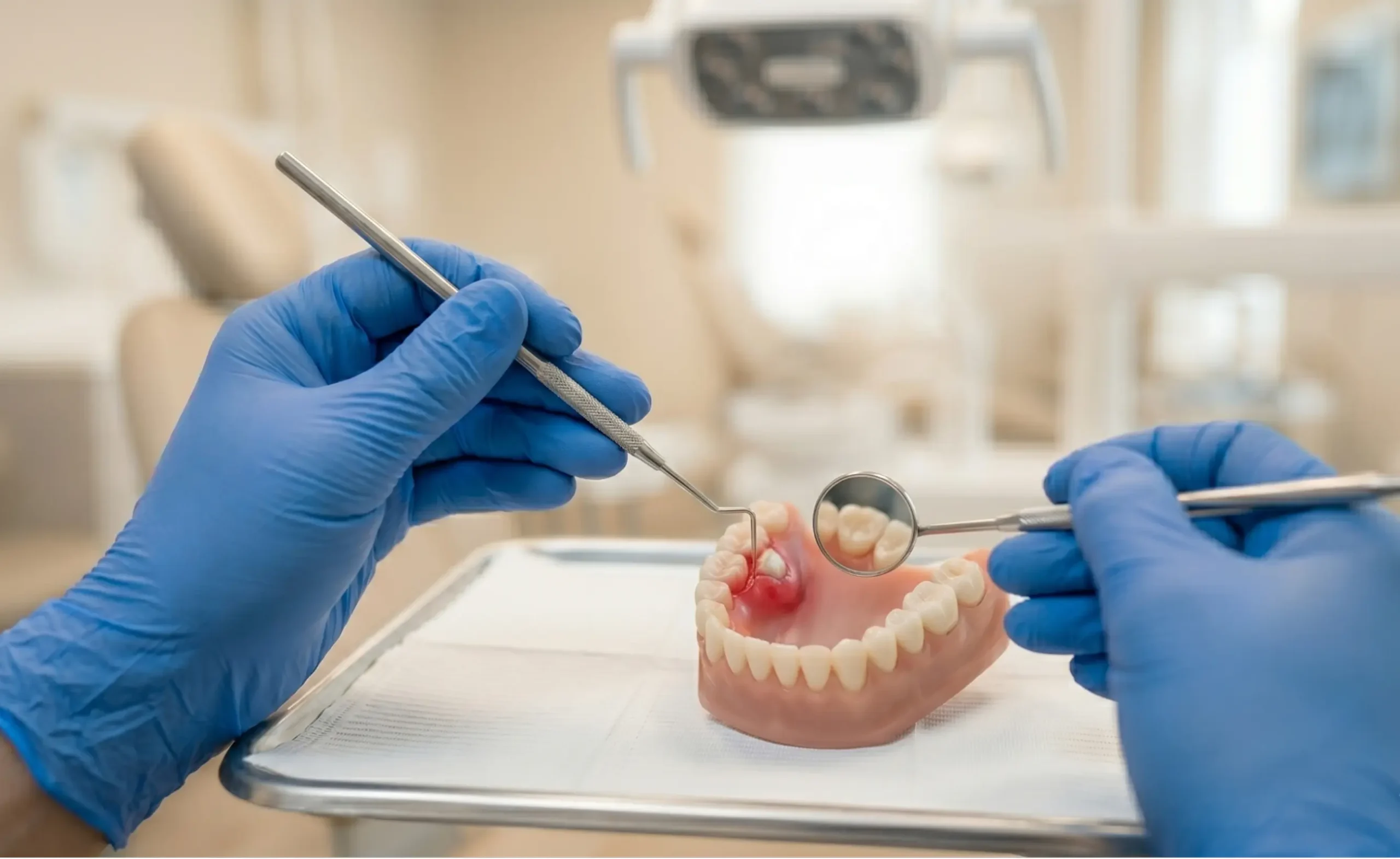
A dental abscess is one of the most serious dental infections a patient can experience. It occurs when bacteria collect inside a tooth, gum, or surrounding bone, leading to a pocket of pus and significant inflammation.
At Belgrave Family Dental in Huntington Park, treating infections early is essential to prevent escalation into more complex and painful conditions.
Unlike general tooth sensitivity or mild decay, an abscess represents an active infection that will not resolve on its own.
What Causes a Dental Abscess?
Abscesses usually develop from untreated dental issues that allow bacteria to enter deeper layers of the tooth or gum.
Common causes include:
- Untreated cavities that reach the tooth nerve
- Cracked or broken teeth exposing inner tissue
- Advanced gum disease
- Failed or delayed dental treatment
- Poor oral hygiene over time
Once bacteria reach internal structures, infection can spread quickly.
Types of Dental Abscess
There are three main types:
- Periapical abscess: forms at the tip of the tooth root due to internal infection.
- Periodontal abscess: develops in the gums supporting the tooth.
- Gingival abscess: occurs in the gum tissue alone, often from trapped debris or injury.
Each type requires professional evaluation to determine the correct treatment.
Symptoms of a Dental Abscess
Symptoms often become noticeable quickly and may worsen without treatment:
- Severe, throbbing tooth pain
- Swelling in gums, cheek, or jaw
- Sensitivity to pressure or temperature
- Bad taste or odour in the mouth
- Fever or general discomfort
- Difficulty chewing or opening the mouth
Swelling is often a key indicator that infection has progressed.
Why Dental Abscesses Are Serious
If left untreated, an abscess can lead to:
- Spread of infection to surrounding tissues
- Bone loss around the affected tooth
- Tooth loss
- Systemic infection in severe cases
- Increased need for emergency intervention
This is why abscesses are always treated as urgent dental concerns.
Treatment Options
Treatment depends on severity and location of infection.
- Drainage of infection: Reduces pressure and removes pus buildup.
- Root canal treatment: Used when infection is inside the tooth structure.
- Antibiotics (when necessary): Helps control spread but does not replace dental treatment.
- Extraction: Recommended if the tooth cannot be saved.
The primary goal is always to eliminate infection and preserve oral health where possible.
Recovery After Treatment
Once treated, most patients experience:
- Rapid reduction in pain
- Decrease in swelling over a few days
- Return to normal function after healing
Follow-up care is important to ensure full resolution.
How to Prevent Abscess Formation
Prevention is focused on stopping infection before it starts:
- Regular dental checkups
- Treating cavities early
- Maintaining daily oral hygiene
- Addressing gum disease promptly
- Avoiding delay when symptoms appear
Early treatment of small issues prevents escalation into abscesses.
Internal Links
Conclusion
A dental abscess is a serious condition that requires prompt professional treatment. At Belgrave Family Dental in Huntington Park, early diagnosis and intervention are key to preventing pain, complications, and tooth loss.